Circle swimming: the rules of the road in a busy practice lane
Six swimmers, one lane, no collisions: it works because everyone knows the same few rules.
October 20, 2026 · 4 min read
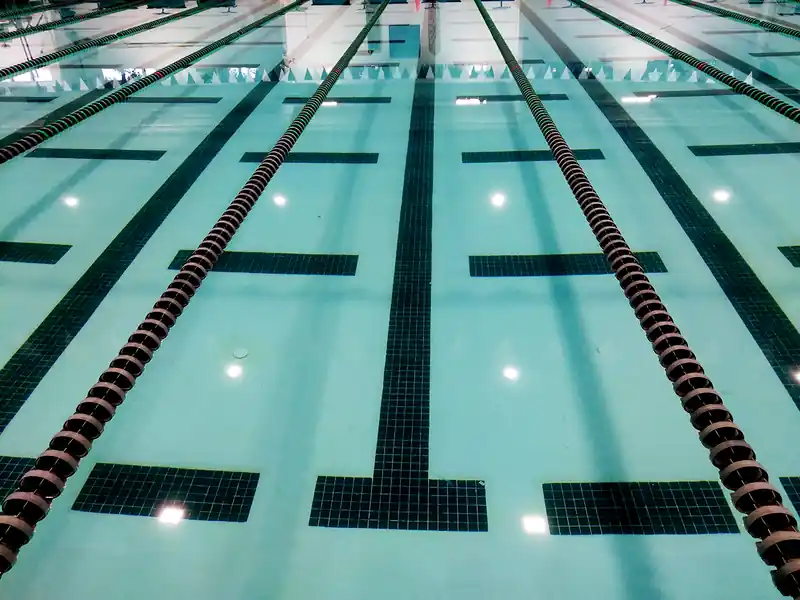
A new swimmer's first practice usually includes a surprise. The lane, which looked like a private runway from the deck, has four, five or six other swimmers in it, all going in the same direction, none of them stopping to say hello. The City of Atlanta Dolphins coaching staff addresses this in a guide on traffic patterns, and they use a phrase every driver understands: rules of the road. Once your child knows the rules, a crowded lane feels orderly instead of scary.
Why lanes circle at all
A practice lane is narrow, and a group practice puts more swimmers in the water than a lane would hold if everyone swam up and back on the same line. Circle swimming solves that. Swimmers go up one side of the lane and come back down the other, the same way cars keep to their own side of a road. Nobody swims toward anybody. A lane that would be a collision course becomes a loop.
The rest of this article describes the general habits coaches teach almost everywhere, not a ruling on what any single Dolphins lane does on any single day. Your coach sets the pattern for the lane, and the coach's word is the last one. The guide is the place to start; the coach on deck is the place to finish.
Stay on your side
Most teams ask swimmers to keep to the right side of the lane, the way American drivers keep right, which means the group swims counterclockwise. The black line on the pool floor is the center line of the lane, and swimmers stay to one side of it rather than straddling it. A swimmer who drifts to the middle puts everyone else in a position where they must dodge, and dodging breaks a stroke.
For young swimmers it helps to say it out loud before the first practice: right side going out, right side coming back. Some parents set up kitchen chairs in a circle and walk through it with their child. It sounds silly and it works.
Leave space at the wall
Spacing is the second rule. Swimmers push off the wall one after another with a small gap, and coaches commonly ask for about five seconds behind the swimmer ahead. The exact gap depends on the set and the lane, so listen when your coach says go. The point is the same everywhere: if you leave too soon, you will touch feet; if you leave too late, you break up the rhythm of the lane.
Swimming close behind someone can feel like a game, and in a race it is called drafting. In a practice lane it is a nuisance. Touching the feet of the swimmer ahead is how most traffic jams begin.
How to pass without a fuss
Sooner or later you will be faster than the swimmer ahead of you. When that happens, the usual signal is a light tap on the feet. The slower swimmer sees that as a request, stops at the next wall and lets you go first. At the wall, not in the middle of the lane, because stopping mid-lane is the one thing that really does cause a pile-up. Passing is a courtesy that goes both ways. The swimmer who gets passed is not being told they are slow; they are being asked to share the lane.
Small habits that keep a lane happy
- Stay to one side of the black line and keep your stroke narrow
- Never stop in the middle of the lane; rest at the wall, tucked into a corner
- When you finish a repeat, move to the side so the next swimmer can turn
- Look up the lane before you push off, then go when you have your gap
- Tap feet gently, once, and pass at the wall
- If something goes wrong, stop and tell the coach instead of trying to fix it in the lane
What this teaches beyond the lane
Circle swimming looks like a rule for traffic, but coaches value it for what it builds. A swimmer who learns to think about the person ahead and behind them is practicing awareness, patience and respect for the group. Those are close to the points the Dolphins list in their mission statement: self-discipline, good sportsmanship and respect for the rights of others. Nobody can feel good about their own practice if the lane around them is a mess.
It also builds a quiet kind of confidence. Learning to push off, hold a line and share a wall with older swimmers is a first taste of being part of something bigger than your own lap. By the second week, most children stop noticing the traffic at all. They just swim.
If your child seems unsure after practice, ask them three things. Which side of the lane did you swim on? How long did you wait at the wall? Who was in front of you? A child who can answer those has the system. A child who cannot is a child who needs the coach to walk them through it again, and coaches are glad to do it. Say so at the next practice, and mention it before the set starts rather than in the middle of it.
To see where your swimmer will be in the water, check the Practice Schedule for the group times, Monday through Friday. The coaching staff's traffic patterns guide on the Information page is a good read to share with an older swimmer who wants the full rules.
City of Atlanta Dolphins Swim Team, (404) 505-3189
Call (404) 505-3189More articles
Your child's first swim meet: heat sheets, Sharpie grids and the bullpen
The first meet is mostly logistics, and a little preparation turns a nervous morning into a good one.
What happens at a Dolphins stroke evaluation
The evaluation is the front door to the team, and knowing what to expect makes it a calm half hour for everyone.