Your child's first swim meet: heat sheets, Sharpie grids and the bullpen
The first meet is mostly logistics, and a little preparation turns a nervous morning into a good one.
October 20, 2026 · 4 min read
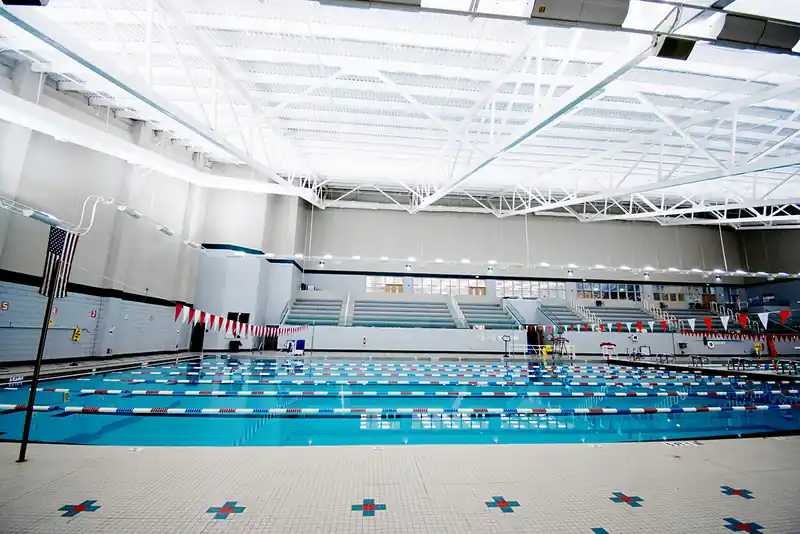
The first swim meet is mostly logistics wearing a nervous smile. Your child already knows how to swim the events. What they do not know yet is where to stand, when to stand there, and why a grown-up just wrote numbers on their arm in marker. The City of Atlanta Dolphins coaching staff put together a First Meet Prep guide for exactly this reason, and this article leans on it, along with the habits any swim coach would hand a family walking onto a pool deck for the first time.
Read the heat sheet before you read anything else
A heat sheet is the meet's schedule, written for swimmers. Each event, whether it is a 50 freestyle or a 100 backstroke, is split into heats, and each heat is split into lanes. Beside every swimmer's name you will find an event number, a heat number and a lane number. Those three numbers are your child's entire job for the day.
Find your swimmer's name and circle it. Then do it again for every event they entered. Heat sheets run to many pages, and a family can lose an hour reading names that belong to other people. Circle first, relax second. Teach your child to track the event number rather than the clock, because a meet that starts late can still move fast, and a heat can finish every minute or two. A swimmer who is ten events away is closer to the block than it feels.
The Sharpie grid on the arm
The Dolphins guide describes a habit that surprises new parents: an event grid written in Sharpie on the swimmer's arm. It is a small table, drawn in a minute, that holds the same numbers from the heat sheet. A nervous eight-year-old is not going to remember event 37, heat 4, lane 5 after warm-ups, and nobody should ask them to. The arm remembers for them.
A good grid answers the four questions a swimmer gets asked all morning:
- Event number, so they know when to report
- The event itself, such as 50 free or 25 back, so they know what they are about to swim
- Heat number, so they know which group they are racing with
- Lane number, so they walk to the right spot behind the block
Ask a coach or an experienced parent to show you the layout the first time. After one meet you will be drawing grids faster than you can say lane five. Write large enough that a timer or a coach on deck can read it without leaning over, and do it with a marker that will not run when the swimmer gets wet.
The bullpen, for swimmers ten and under
For swimmers ages 10 and under, the guide explains something called the bullpen. The word comes from baseball, where relief pitchers wait for their turn. At a swim meet it is a holding area near the start where younger swimmers gather and are sorted into their heats, so that volunteers can line children up by event instead of chasing them around a wet deck.
What your child needs to know is simple. Somewhere before their event, they report to the bullpen, and from there an adult helps them find their heat and lane. The exact timing varies from meet to meet, so ask the coach on deck when to send your swimmer over, and ask once, early. That single question saves more tears than any pep talk.
Pack for a long day
A meet is not a two-hour affair. A swimmer might race three or four times across a morning, with long gaps in between. Pack two suits, spare goggles, two towels, a dry shirt and warm clothes for the waiting, because a wet child sitting under air conditioning gets cold quickly. Bring a water bottle and food that is easy to digest: fruit, plain crackers, a sandwich. Skip anything heavy before a race, and leave brand-new goggles at home.
Know what a meet costs before you enter
Entry details live in the team's procedures. Meet entry fees are owed by the date on the event form, and they are payable whether or not the swimmer ends up swimming once entered. Entries are not submitted without the fee. It is the kind of rule that is easy to miss when you are excited about a first meet, so read the form the day it arrives, not the day it is due.
The Dolphins host four meets a year: two short course, swum in 25-yard pools, and two long course, swum in 50-meter pools. Whether your child's first meet is at home or away, the heat sheet will look much like the one described above, and so will the morning.
What to say after the race
When the race is over, resist the urge to review the stroke. Your child does not need a technique report from the bleachers. Ask how it felt. Ask what they would do differently, if they have an opinion. Then tell them one specific thing you saw that made you proud, like the way they walked to the block without looking back at you. Faster times come later. The first meet is about learning that the whole process is survivable, and even fun.
If you want to see how meets work from the team's side, the Meet Information page lists the invitationals the Dolphins have hosted and attended, and the Procedures page explains how entries and fees are handled. Bring your remaining questions to the coaches at practice, which runs Monday through Friday.
City of Atlanta Dolphins Swim Team, (404) 505-3189
Call (404) 505-3189More articles
What happens at a Dolphins stroke evaluation
The evaluation is the front door to the team, and knowing what to expect makes it a calm half hour for everyone.
Circle swimming: the rules of the road in a busy practice lane
Six swimmers, one lane, no collisions: it works because everyone knows the same few rules.